1. Fabrication of nano sensors for Glucose and pH detection in 3D co-culture tumour spheroids
Evaluation of glucose in cancerous tumours acts as a hall mark for cancer progression and thus serves as a major interest in these days. Here, we have developed a biocompatible, surface enhanced Raman spectroscopy-based glucose Nano Particle Sensor (SERS-gNPS) to measure the glucose dynamically in 3D Co-cultured Colon Cancer Tumour Spheroids (3D-CCTS). These 3D-CCTS were produced using polydimethylsiloxane (PDMS) based µ-well array chip. Tumor acidosis is a consequence of altered metabolism that, primarily takes place due to lactate secretion from anaerobic glycolysis. As a result, many regions within the tumors are chronically hypoxic and acidic. Here, we have developed a biocompatible, surface enhanced Raman spectroscopy-based pH nano particle sensor (SERS-pNPS) to measure the pH dynamically in 3D multicellular spheroids. The 3D multicellular spheroids were produced using polydimethylsiloxane (PDMS) based µ-well array chip.

Figure: Process for intracellular glucose measurement (a) 3D co-cultured tumour spheroids (b) disruption of tumour spheroid (c) permeabilization of cell membrane (d) centrifugation (e) supernatant solution of the intracellular fluid to measure glucose (f) SEM image of the PDMS based μ-well 3D cell-culture chip (g) SEM images of multicellular spheroid formed in the μ-well 3D cell-culture (h) Co-culture of HCT-8 and fibroblast cells self-organizes into tumor spheroids (i) Center cross-sectional view
2. Microfluidic T cell therapy and CAR-T cell production
Cancer is one of the most challenging health conditions globally, and blood cancer, in particular, has been a significant concern for patients and healthcare providers alike. However, advancements in medical science have paved the way for innovative treatments like T Cell Therapy and CAR-T cell production, offering new hope to patients battling blood cancers such as leukemia, lymphoma, and myeloma. In recent years, India has emerged as a leading destination for CAR-T Cell Treatment, combining cutting-edge technology, skilled medical professionals, and affordable healthcare solutions. The current techniques and methodology for generating CAR-T cells are tedious, time-consuming, and unaffordable. We are working on effective ways to perform T cell therapy as well as CAR-T cell production. By utilizing microfluidic technology combined with a physical cell therapy technique, we significantly reduce the time and expense of CAR-T cell production. We are also working on non-viral mediated therapeutic platforms that utilize microfluidic mechano-optoporation to obtain a safer method of CAR-T cells production and comparing them to existing viral vector-generated CAR-T cells for effective clinical applications.

Figure: Schematic illustration of CAR-T and our therapeutic strategies for cell engineering using advanced microfluidic activated therapeutic tools
3. On-chip ctDNA detection
On-chip ctDNA detection is transforming oncology by consolidating intricate laboratory processes into a single microfluidic device, creating an innovative "liquid biopsy" platform for real-time cancer monitoring. Tumor-derived DNA fragments circulate at sub-picomolar levels amidst a vast surplus of normal cell-free DNA (cfDNA), prompting these compact chips to employ precise fluidics for ctDNA isolation through methods like size-based filtration, affinity capture, or electrokinetic enrichment. Once isolated, the biomarkers are swiftly directed to integrated transducers, which may be electrochemical, optical, or nano-metamaterial in nature. These highly sensitive biosensors interpret tiny genetic mutations and epigenetic methylation patterns with exceptional specificity. By significantly minimizing sample volumes and reducing turnaround times, this seamless integration of microfluidics and molecular biosensing overcomes traditional macro-scale constraints, effectively linking advanced genomics with rapid, point-of-care precision diagnostics.
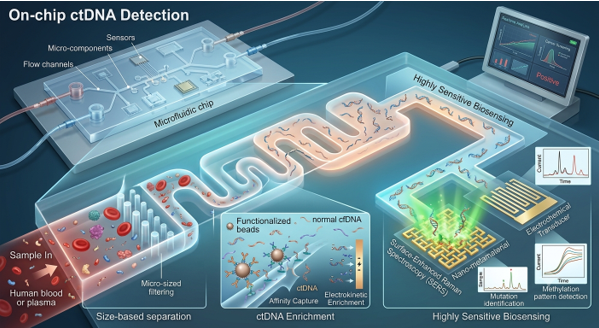
Figure: On-chip ctDNA detection for point-of-care precision diagnostics
4. On-Chip Circulating Tumor Cell (CTC) Detection:
On-Chip Circulating Tumor Cell (CTC) Detection is transforming cancer monitoring by integrating comprehensive laboratory tests into a single automated microfluidic chip. Circulating tumor cells (CTCs), which break away and circulate in the bloodstream, are exceedingly rare, often being just one in billions of regular blood cells, which makes their detection difficult. Advanced microfluidic chips address this issue by employing two innovative techniques: physical sorting, which separates larger cancer cells based on size, and chemical capture, which utilizes magnetic beads or pillars coated with antibodies to target specific cancer markers such as EpCAM, CD133, and HER2. This entire process occurs within a compact, enclosed system, enabling scientists to isolate these rare cells without causing loss or damage. Once captured, the living cancer cells undergo immediate genetic analysis using highly sensitive biosensors. The gentle handling by the chip ensures the cells remain viable, allowing researchers to cultivate them directly on the device and test various cancer drugs to determine the most effective treatment. This technology ultimately enables the provision of rapid and personalized cancer insights directly at the patient's bedside.
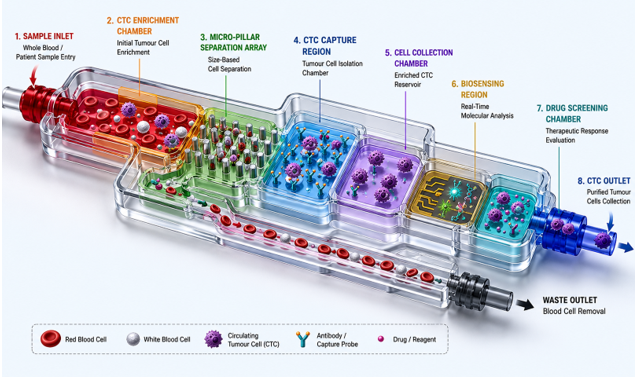
Figure: Integrated on-chip platform for Circulating Tumor Cell (CTC) isolation, detection, and functional analysis
5. Cancer–Neuron Co-culture Chip
Cancer remains one of the leading causes of mortality worldwide, while many anti-cancer therapeutics can induce severe neurological side effects. To address this challenge, we have developed a microfluidic cancer–neuron co-culture platform that recreates key aspects of the tumor–neural microenvironment in vitro. The device enables a compartmentalized culture of neuronal and cancer cells while facilitating biochemical communication through microgroove-mediated interactions. Anti-cancer drugs can be introduced into the platform to simultaneously evaluate tumor response and neuronal health. Functional and biological readouts, including calcium imaging, cell viability, and immunocytochemistry, are employed to assess drug-induced neurotoxicity. This integrated tumor–neuron-on-a-chip system provides a physiologically relevant platform for drug screening and supports the development of safer, more effective cancer therapeutics.
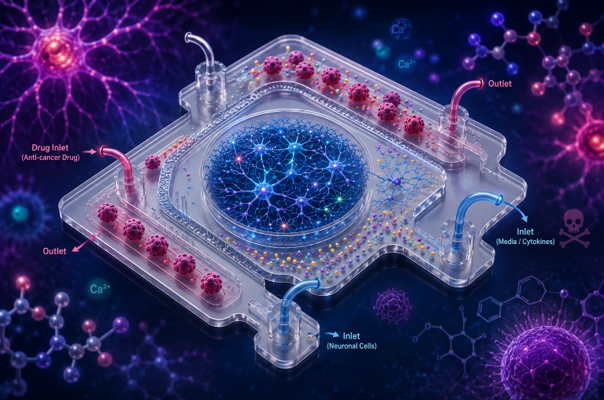
Figure: Microfluidic cancer–neuron co-culture platform. Neurons cultured in the central chamber communicate with U87MG glioblastoma cells through microgroove-mediated molecular exchange. Anti-cancer drugs are delivered through dedicated microfluidic channels, and cellular responses are assessed using Fura-2 AM calcium imaging, viability assays, and immunocytochemistry.
6. Liver-on-a-chip
Current liver-on-a-chip platforms have significantly advanced the modeling of liver diseases by recreating the dynamic microenvironment of hepatic tissue under continuous perfusion. These systems typically incorporate hepatocytes along with non-parenchymal cells such as endothelial cells, Kupffer cells, and hepatic stellate cells to mimic physiological liver functions and disease progression. In the context of NAFLD/NASH, excessive free fatty acid (FFA) exposure leads to mitochondrial dysfunction and increased generation of reactive oxygen species (ROS), particularly hydrogen peroxide (H₂O₂), which serves as a key indicator of oxidative stress and hepatocellular injury. To monitor these pathological changes in real time, researchers have begun integrating electrochemical and optical H₂O₂ sensors directly within liver-on-a-chip devices. These integrated sensing platforms enable continuous, non-invasive measurement of oxidative stress biomarkers without the need for endpoint assays, thereby providing dynamic insights into disease progression and cellular responses.
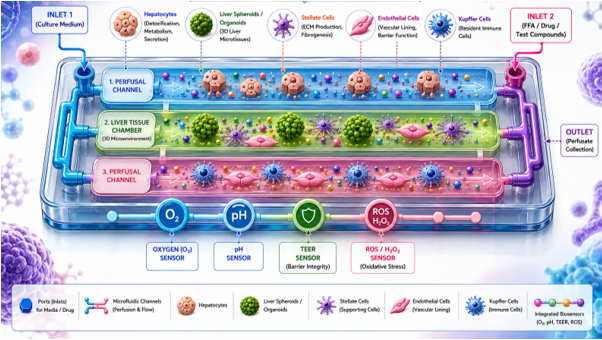
Figure: Liver-on-a-chip platforms recreate the physiological liver microenvironment and enable advanced modeling of liver diseases such as NAFLD/NASH.
7. Lab-on-Chip Device for Early Breast Cancer Mutation Detection
Early detection of ESR1 mutations in certain breast cancer subtypes serves as a warning sign and helps physicians adjust treatment strategies. The hotspot ESR1 mutations in breast cancer include Y537S/N/C, D538G, and E380Q. Biomarkers such as ctDNA (circulating tumour DNA) can detect breast cancer more quickly than invasive and radionuclide-based techniques. Microfluidic devices with specific channels and reaction chambers can scan for ctDNA in blood samples and detect ESR1 gene mutations. The working principle of our Point-of-Care Testing chip will have magnetic nanoparticles conjugated to DNA aptamers that act like tiny hooks, pulling only the relevant cancer biomarkers out of the blood. We will implement gene editing tools subsequently, which will be tethered to electrochemical or fluorescent sensors to scan and quantify the specific mutations, reducing the time-consuming and expensive devices which copies and amplifies DNA. This entire diagnostic chain is built on a single device, resulting in a fast, low-cost platform for immediate point-of-care or bedside testing. Future goals would also be to isolate, sequence, and build repositories and databases for ctDNA from different breast cancer patients. Furthermore, our goals will include developing such diagnostic kits that provide quick, on-site results for other cancer types.
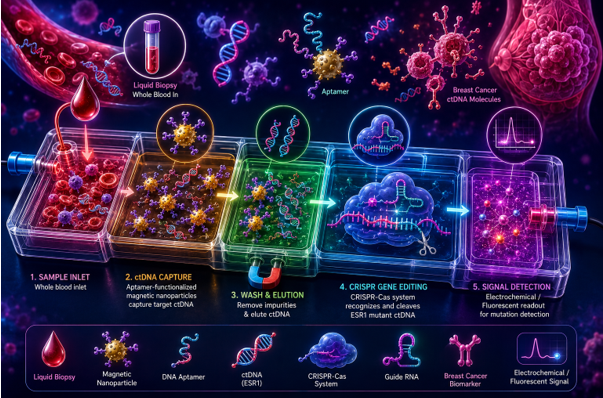
Figure: Lab-on-Chip device for early breast cancer mutation detection.
8. Periodontium-on-a-Chip
We developed a biomimetic periodontium-on-a-chip platform using a triple-compartment microfluidic device that replicates the cementum, periodontal ligament (PDL), and alveolar bone microenvironments. Aligned gelatin nanofibers and lithium calcium silicate (LCS)-infused nanofibers were incorporated to mimic native Sharpey's fibres and mineralised tissues. Human mesenchymal stem cells (hMSCs) were differentiated into cementogenic and osteogenic lineages and validated through RNA sequencing, immunocytochemistry, and lineage-specific markers. Periodontitis was induced using lipopolysaccharide (LPS), and inflammation was evaluated through ROS generation and THP-1 monocyte adhesion. Rescue studies with metformin and curcumin significantly reduced inflammatory responses. This physiologically relevant platform enables disease modelling, therapeutic screening, and personalised periodontal treatment development.
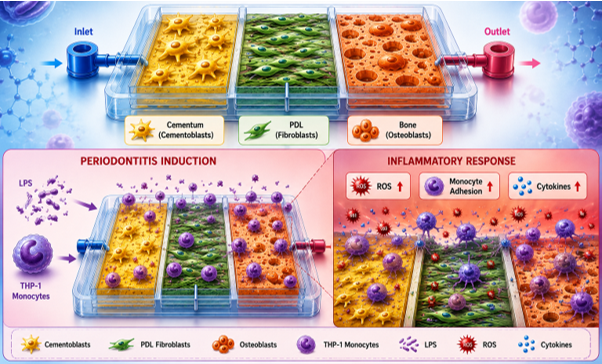
Figure: Periodic table on a chip as a model for the investigation of inflammatory responses in periodontitis.
9. Lab-on-a-Chip Devices for Sperm Sorting
Sperm sex sorting technology in cattle breeding has profound implications for dairy and meat production, economic growth, and ethical considerations. By enabling gender selection, farmers can increase female calf births, enhance milk production efficiency while reducing male calf culling and herd management challenges. This contributes to rural economic growth by empowering small-scale farmers through better resource allocation and financial stability. We developed Lab-on-chip devices that successfully shorten the sperm using light excitation or magnetic beads. X-sperm with reduced motility are separated, while Y- sperm remain highly motile for collection. Testing with poultry and livestock sperm enhance throughput, efficiency, and cost-effectiveness, reducing cell damage and improving viability. This innovation has immense potential in the artificial reproduction market, making gender-specific livestock breeding more accessible and sustainable.
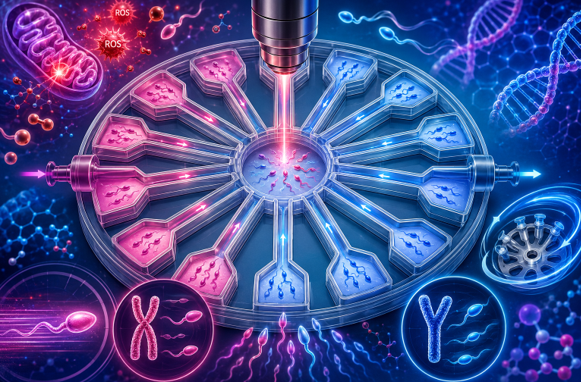
Figure: Lab-on-a-Chip device for sperm sorting
10. Cardiovascular-on-a-chip
We are working on human innervated vascularized myocardium model, a groundbreaking microfluidic platform that revolutionizes cardiovascular research by mapping the vital "brain-heart axis" interfacing with vasculature on a single, human-derived chip. By seamlessly integrating neuronal, vascular, and myocardial cells across three interconnected channels, this innovative model uses advanced 3D soft-gel cultures and dynamic fluidic shear stress to perfectly replicate the complex architecture of the living human heart. Traditional animal models often fail due to species-specific differences, but our humanized, innervated, and vascularized myocardium-on-a-chip operates on a absolute human genetic background, unlocking precise mechanistic insights into how aberrant neural signals trigger heart failure. This unprecedented spatial control and physiological accuracy transform the platform into an ultra-precise tool for next-generation disease modelling, safer neuro and cardiotoxicity drug screening, and personalized medicine, ultimately paving the way to replace animal testing with ethical, scalable, and predictive human science.
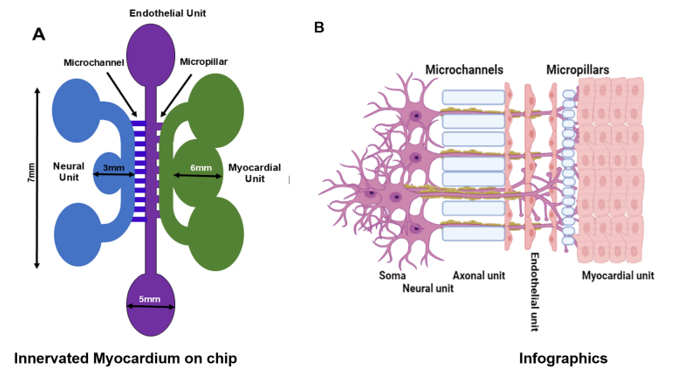
Figure: Cardiovascular-on-a-chip next-generation disease modeling.
11. Lung-on-a-Chip
Chronic respiratory diseases like COPD and emphysema are significant global health concerns, ranking third in mortality worldwide. Existing disease models often lack accuracy in capturing the chronic and complex nature of these conditions, impeding advancements in treatment development. Innovative research models are urgently needed to better replicate the complexities of these diseases and advance our understanding of their mechanisms.We focused to introduces a cutting-edge lung-on-a-chip microfluidic device tailored for modeling chronic respiratory diseases, particularly emphysema. By integrating 3D printing and microfluidics technologies, it closely mimics human in-vivo conditions, facilitating in-depth exploration of disease progression and cellular dynamics in a controlled environment.
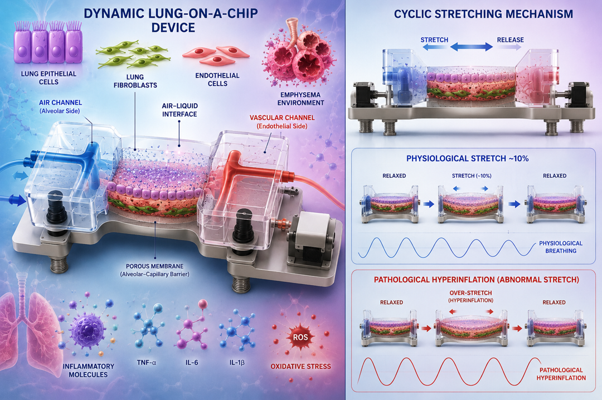
Figure: Lung on a Chip device design and fabrication
12. Diabetic-on-a-Chip
With India on track to become the "Diabetic Capital of the World," diabetic foot ulcers will plague Indians, and in the worst-case scenario, the patient may be forced to amputate his or her leg, jeopardising their quality of life. Current animal and cell-based methods are physiologically inadequate to appropriately provide accurate outcomes for clinical translation of diabetic foot ulcer (DFU) therapy. The ideal model would have patient derived cells such as fibroblast, keratinocytes epithelial and endothelial cells seeded in the reproducible hydrogel scaffolds contributing for endogenous "diseased" extracellular matrix formation. Thus, devising the snapshot of the process occurring in vivo under the dynamic microfluidic based diseased chip model, will be our priority area of endeavour, followed by tissue regeneration utilising nano-bioglass.

Figure: Diabetic on a Chip Devices for diseases model and tissue regeneration
13. Organ-on-a-Chip
An organ-on-a-chip (OOC) is a dynamic platform made up of 3-D microfluidic multi-channels combined with labs-on-chips (LOCs) and cell biology, allowing us to investigate human physiology in an organ-specific context under in vitro culture conditions. Organ-on-a-chip (OoC) technologies has appealing features that may eventually allow us to envision the modelling of organs for pathophysiology studies and drug testing at the microscale level, thereby substituting animal models. In our lab, we seek to develop an OoC platform that mimics highly complex organs such as the lungs, heart, pancreas, and kidney utilising appropriate human-origin cells in order to better understand the organ's pathophysiology and disease management.

Figure: Organ on a Chip devices to understand the organ's pathophysiology and diseases.
14. Nano-localized single-cell nano-electroporation
The ability to deliver foreign cargo into single living cells is of great interest in cell biology and therapeutic research. Here, we have reported single or multiple positions based nano-localized single-cell nano-electroporation platform. The device consists of an array of triangular shape ITO nano-electrodes with a 70 nm gap between two nano-electrodes and each of having 40 nm tip diameter. The voltage is applied between nano-electrodes to generate an intense electric field, which electroporates multiple nano-localized regions of the targeted single-cell membrane, and biomolecules gently deliver into cells by pressurizing pumping flow, without affecting cell viability. The platform successfully delivers dyes, QDs, and plasmids into different cell types with the variation of field strength, pulse duration, and the number of pulses. This new approach allows us to analyze different biomolecular delivery into single living cells with high transfection efficiency (> 96%, for CL1-0 cell), and high cell viability (~98%), which are potentially beneficial for cellular therapy and diagnostics purpose.

Figure 1. (a). Schematic of nano-localized single-cell nano-electroporation (NL-SCNEP) chip. (b) Optical microscopic image of 100 nm thin suspended Si3N4 membrane (800 µm × 800 µm) with patterned ITO lines. (c) Scanning electron microscopy (SEM) image of ITO lines. (d) Focused Ion Beam (FIB) cut ITO lines to form ITO nano-electrodes. (e) An SEM image of ITO Nano-electrode with 70-nm gaps. (f) Single-cell attachment on top of the ITO nano-electrodes before the experiment. (g) The final packaged nano-electroporation device with a Printed Circuit Board (PCB) (h-i) PI dye delivery using ms and µs pulse (j) plasmid delivery using ms pulse.
15. Photporation based drug delivery/ Single-cell photoporation
In intracellular delivery, the introduction of foreign biomolecules into cells with high transfection efficiency and high cell viability is a challenging task for therapeutics, diagnostics, diseases analysis and many biological and biomedical research. We reported infrared (IR) pulse laser-activated high efficient massively parallel intracellular delivery using an array of titanium micro-dish (TMD) device. The IR laser was espoused on an array of TMD device, which induces heat generation, resulting in the formation of cavitation bubbles at the cell membrane surface and create transient membrane pores to deliver biomolecules into cells by a simple diffusion process. We successfully delivered dyes and the different size of dextran in different cell types. Our platform has the ability to transfect more than 1000000 cells in parallel fashion or even more within a minute. The best results were achieved using propidium iodide dye and dextran 3000 MW delivery in SiHa cells with 96% and 98% delivery efficiency and 98% and nearly 100% cell viability. The device is compact, easy to use, and potentially applicable for cellular therapy and diagnostics purposes.

Figure: Schematic of photoporation based massively parallel intracellular delivery (Left Figure), microfabrication (Middle Figure) and parallel intracellular delivery in different cancer cells (Right Figure)
16. Laser based cell therapy
This research present nanosecond pulse laser induced plasmonic photoporation for a high efficient intracellular delivery with high cell viability using nano-corrugated mushroom shape gold nanoparticles (nm-AuNPs). In our study, poly ethylene glycol (PEG) modified nm-AuNPs bind with different cancer cells as well as embryonic stem cells easily create transient membrane pores due to high surface plasmon generated nanobubbles upon pulsed laser illumination and thus cargos such as dyes, Quantum Dots (QDs) and plasmids can be gently delivered into cells. We found uptake efficiency and cell viability can depends upon laser fluence and concentration of nm-AuNPs. The higher laser energy produce higher intracellular uptake for CL1-0 cells with close to 100% cell viability near infrared wavelength.

Figure: Schematic of laser based cell therapy (First Figure), COMSOL Multiphysics simulation of core shell nm-AuNPs (Second Figure), nm-AuNPs fabrication using micro/nano fabrication and cell attachment (Third Figure), Intracellular delivery in different cancer cells and stem cell (Forth Figure).
17. Single-cell Mechanoporation
Highly efficient intracellular drug delivery strategies are essential for developing therapeutic, diagnostic, biological, and various biomedical applications. The recent advancement of micro/nanotechnology has been focused numerous researches towards developing microfluidic device-based strategies due to the associated high throughput delivery, cost-effectiveness, robustness, and biocompatible nature. Among all of the physical methods, the mechanoporation strategies are advantageous because of no external energy source required for membrane deformation, thereby achieving high delivery efficiencies and increased cell viability into different cell types with negligible toxicity.

Figure: Schematic of mechanoporation device
18. Micro-contact cell printing technologies
In order to pattern substrates, Polydimethylsiloxane (PDMS) micro pillar structure is fabricated using SU8 mold using micro/nanofabrication technique. These PDMS structures are used as stamp to print fluorescence ink/ cell specific proteins on the substrate. Then cell was cultured on substrate and align cells in desired pattern with high cell viability. This cell printing technique is very useful for different cellular study such as cellular heterogeneity, cell-cell interactions, cell-environment interactions, cell signaling, diseases analysis and different omics analysis.

Figure: (a) Schematic of PDMS microstamp and proteins/fluorescence stamping on substrate (b) successful experimental results of different fluorescence stamping on substrate.
19. Microfluidic nanomaterials synthesis and therapeutic applications
Nanoparticles have become an essential component in the biomedical field for various applications due to their unique physicochemical properties. The nanoparticles with desired size, composition and morphology for biomedical applications, require to control over the reaction kinetics of nucleation and growth steps. In a conventional batch reactor, it is difficult to control the synthesis by tuning these parameters. The microfluidic based NPs synthesis can overcome this issue by simply vary the flow rate, channel geometry, materiuals and fabrication at any point of time. Further, it has advantages over conventional batch reactor, such as continuous synthesis of NPs in large scale with uniform size distribution, using minimum amount of reagent consumption and higher reproducibility. Further due to less toxicity of NPs, it can be use for diverse biomedical applications suchas imaging, therapy drug delivery and sensing.

Figure: Schematic of microfluidic nanomaterials synthesis device
20. Wearable biosensors
Biosensors are molecular analytical device which provides a detectable biochemical or physiochemical signal upon the biological interaction between the analyte and receptor of interest. The electrochemical based biosensors detect analytes either quantitatively or qualitatively by the use of oxidation and reduction (redox) reactions.
Current application of sweat analysis methods to healthcare is restrained by the lack of low-cost, portable sensors that are capable of measuring µM to nM concentrations of glucose. In our lab we aim to develop a wearable biosensor (as a smart patch) which has capability to be integrated to low power portable electronics for monitoring of glucose levels. The idea here is to use sweat as an alternative biological matrix useful to detect glucose levels in diabetic patients. An electrochemical interface and a tailor-made polymeric membrane (molecularly imprinted polymer-MIP) acting as a molecular memory layer will be developed for facilitating the stable and selective recognition of glucose in sweat. Paper based microfluidic devices are a promising solution offering unmatched miniaturisation potential and low fabrication cost. The underlying sensing mechanism of MIP provides sufficient selectivity for reliable application in complex sweat mixtures.

21. Tissue engineering and regenerative medicine
Cells show bidirectional interaction with Extracellular matrix (ECM) through specialized membrane receptors like integrin to sense mechanical and chemical stimulus. The ECM structure and cell alignment is varying from organ to organ based on its specific functional requirements. Under specific mechanical or chemical stimulus, cells can secrete proteins and enzymes to build or remodel ECM structure. Currently, we are developing 2D cell patterning for alignment of cells in a specific pattern by providing different chemical stimulus to cells. To achieve cell alignment micro contact printing technique for substrate patterning is employed. Cells are seeded on pre patterned substrates. Based on the cell affinity to particular chemical stimulus, they get aligned on the substrate. After array of cell (single or multiple) alignment, this platform are using for tissue engineering and regenerative medicine purpose.

Figure: Formation of array of cells.
22. Microfluidic neuronal platform for neuron regenerative studies
Understanding the basic mechanisms of neural regeneration after injury is a pre-requisite for developing appropriate treatments. This research aims the fabrication of compartmentalized microfluidic chip to isolate and grow axons ultimately delivering a platform for analysing neuronal response to axonal directionality. It also helps in monitoring the axon-neural scaffold interfacing for neuro-regenerative perspective. These neuro-scaffolds comprise of electro spun polymeric nanofibers. The microfluidics chamber allows the flexibility of focussing particularly on axons for exposing them to external stimuli on glass surface or on scaffolds.

Figure: Culture of neurons extending axons on compartmentalized microfluidic device
23. 3D printing/Microfluidic 3D scaffold/Organ-on-a-Chip model for periodontal regeneration
Owing to unique morphology and properties Graphene foam is gaining interest in various tissue engineering applications. While mimicking the layered native tissue structures, biggest drawback is separation or loose integration of various layers, therefore leading to failure of the scaffold and functionality. But generation of layered functionally gradient structure having core of graphene foam solves this issue along with providing better connection and organization of cells and cellular signals. This scaffold also provides the higher degree of freedom to optimize the polymer reinforcement and therefore tuning biological and physical properties. Particularly, for periodontitis, the prevalence of the disease is very high nationally and globally. Every clinic will have minimum of one or two patients every day and every department of each college will have a minimum of 20-25% of the patients attending every day with periodontitis. Therefore the close mimicry of natural tissues, degenerated in the diseased condition can be regenerated with the application of proposed functionally gradient scaffold. So society and market wise we feel it will be of great benefit.

Figure: SEM of 3D scaffold layers (First row, Figure a-c) and florescence images showing MG-63 cells growing on 3D scaffold layer. (Figure a, second row) cross section of the scaffold. (Figure b and c, second row) Cells are stained with Calcein (green) dye to show cell viability. Arrows indicate cells growing on scaffold.
24. Nanostructure materials/Implantable devices for biomedical applications
We are developing different nanostructures such as nanotubes, nanocones, nanoflowers, nanoporus, nanofibers material on commercially pure titanium, titanium alloys, magnesium alloys for biomedical applications. Currently, the Nanotubes are using for controlled or localized drug delivery applications using different physical methods such as electroporation, photoporation, machoanoporation, microinjection and etc. The fabrication of nanofibers using electrospinning are using for wound healing applications.

Figure: SEM image of fabricated electrospun PCL fibers (Figure a-d, First column). Fabrication of TiO2 monolayer (Figure a-b, second column) and TiO2 double layer (Figure a-b, second column).