

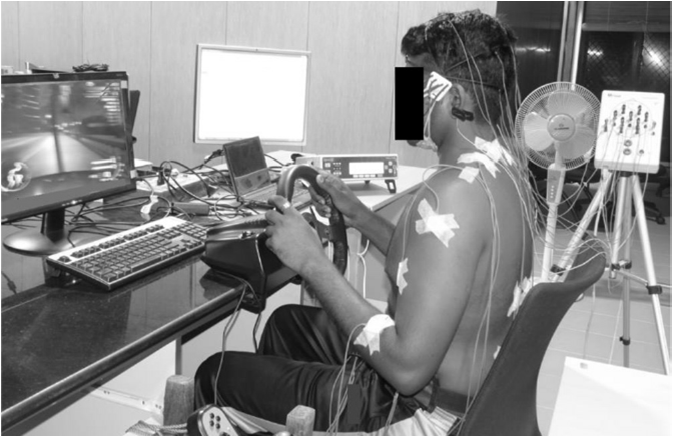
Safe driving places importance on cognitive aspects, such as perception, vigilance, reasoning, judgement as well as efficient motor skills. Cognitive fatigue brings about a loss of attentiveness in drivers, which could be detrimental; decrease in attentiveness can be measured using electroencephalogram (EEG) signals. The principal objective of this study was to analyse and determine cognitive fatigue within subjects during a short duration of driving in a simulated environment using EEG recordings. Six male volunteers participated in this study in which each of them drove for 15 min in the simulator. EEG signals were collected from seven characteristic locations on the cranium using surface electrodes.
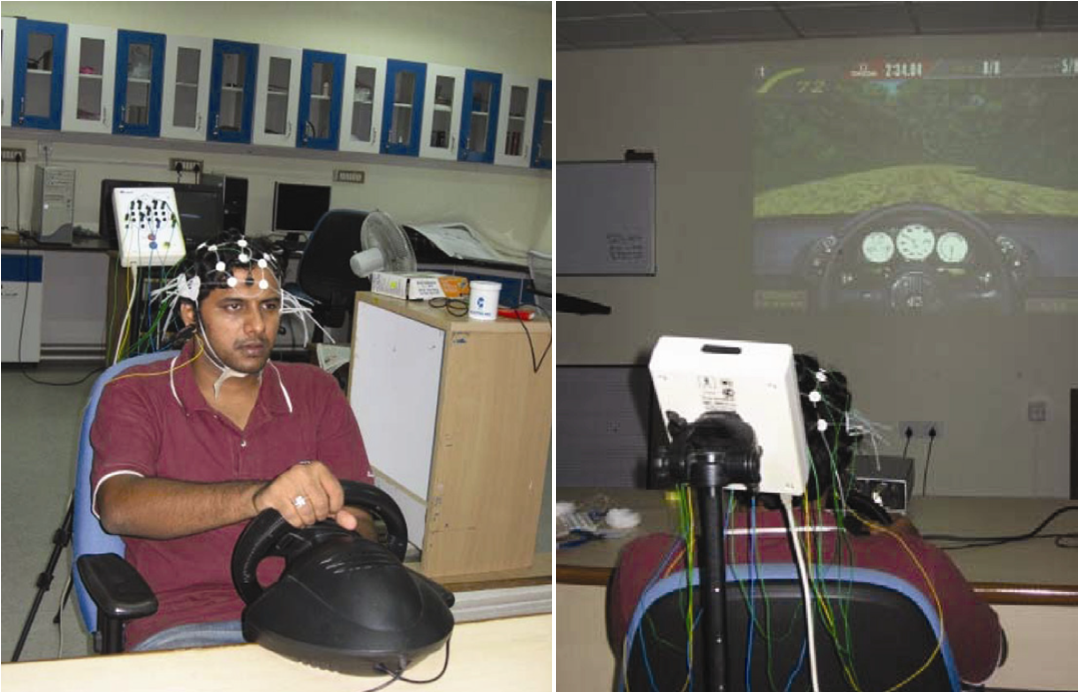
Electrode placements for EEG recording and experimental setup.
Mean alpha activities corresponding to the 4th and 12th min were computed for all channels. Mean power alpha activity was significantly high (p < 0.028) in the 12th min when compared to 4th min. This is symptomatic of cognitive fatigue in the volunteers. Our study effectively demonstrated that cognitive fatigue in drivers can be determined using EEG.
Mean alpha power value in 4th, 8th and 12th min for seven electrode positions for all subjects.
This technique can be used as a system in automobiles and trucks as a real time fatigue detector to alert the driver as well as monitor the mental status of the drivers. A personalised testing for individual drivers can be performed to determine decrease in alertness levels for further focused stress release training to increase brain activity. This can substantially reduce and even help avoid accidents on road.